
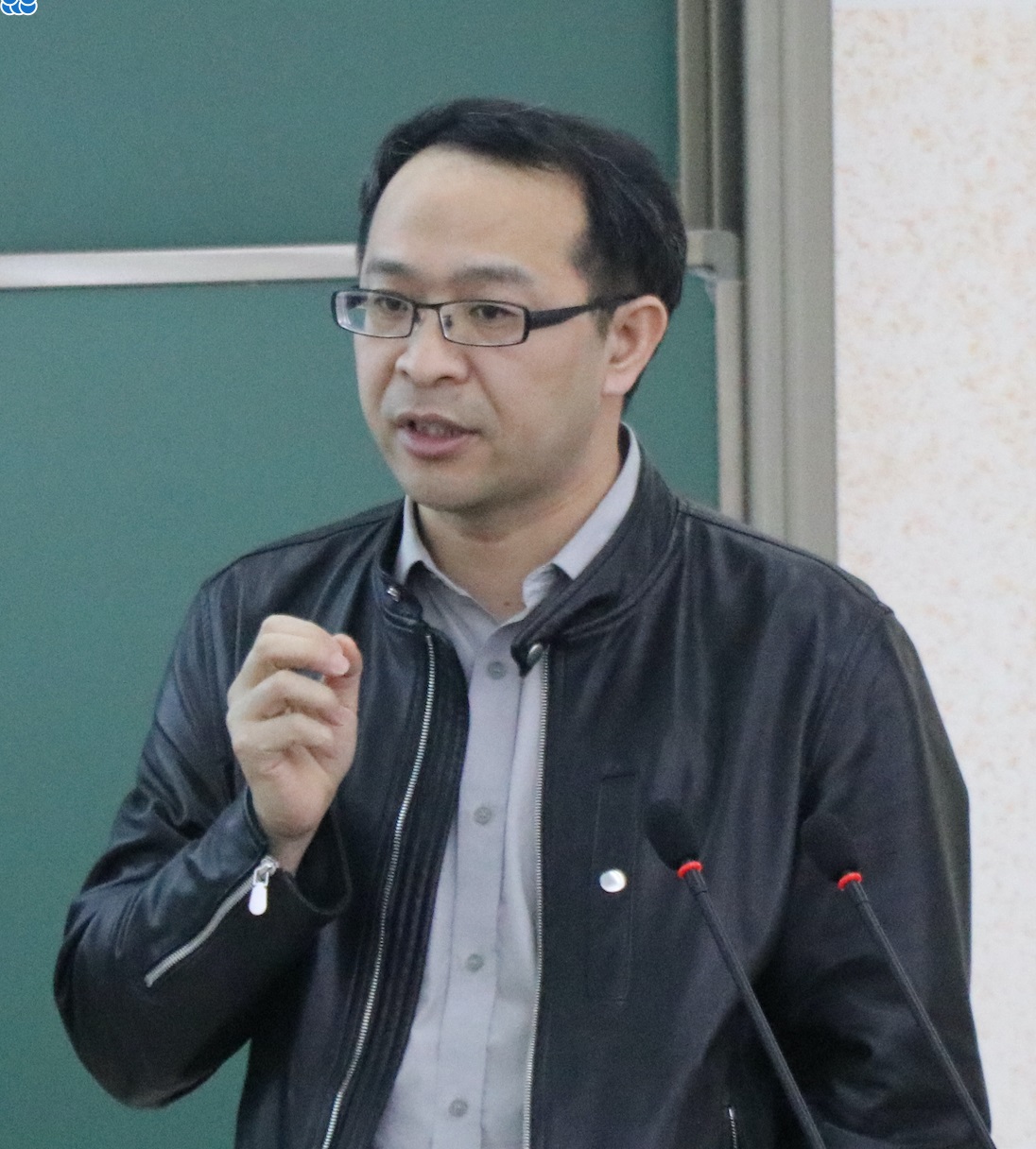
职称:教授、博士生导师
教育履历:
1994-1998年,山东大学,物理学学士
1998-2001年,北京大学,核技术及应用硕士
2004-2009年, 伊利诺伊大学厄巴纳-香槟分校,生物物理及计算生物学博士
工作经历:
2001-2002年, 北京医疗器械研究所,助理研究员
2009-2013年, 普林斯顿大学物理系,博士后
2013-2014年, 杜克大学物理系,博士后
2014-2022年, 北京大学物理学院重离子物理研究所,百人计划研究员,
博士生导师
北京大学定量生物学中心,研究员,博士生导师
2022年- 河北工业大学生命科学与健康工程学院,元光学者教授,博士生导师
学术兼职:
无
研究领域:
定量发育生物学、肿瘤生物物理、类器官合成、基于AI的生物网络建模、生物信息统计等
承担项目:
河北省中央引导地方科技发展资金项目(自由探索类基础研究),246Z2604G,肿瘤细胞迁移的力化耦合机制研究,10万,2024-2027,在研,主持
国家自然科学基金面上项目,32271293,果蝇胚胎早期发育转录调控网络鲁棒性的分子机制研究,52万,2023-2026,在研,主持
学术成果:
长期从事生物和物理交叉领域的理论创新、技术突破与工程应用研究,瞄准组织工程和肿瘤个性化治疗中的关键基础共性问题,系统地开展了“数字孪生胚胎和类器官合成”研究。通过整合微流控、定量成像、高通量测序和基于AI的数学建模等方法,探索胚胎发育为代表的生物过程的调控原理,解析肿瘤细胞迁移的力化耦合网络等的调控机制,揭示多细胞系统的设计原理,建立数字孪生胚胎模型,以期理性设计体外合成多细胞仿真体系,创立基于微流控技术的肿瘤等类器官高通量药筛平台, 应用于药物设计和组织工程等领域整合定量以通讯作者或第一作者身份在 Nature Communications,PNAS 和Advanced Science 等杂志上发表了50余篇SCI论文,引用2000多次。主持了3项国家自然科学基金委面上项目,参与了多项重点项目
近5年发表论文(*通讯作者):
1. K.K. Kong, C.X. Luo, F Liu* (2024), “Tuning the diffusion constant to optimize the readout of positional information of spatial concentration patterns”, Chinese Physics B 33(8), 088703.
2. K.K. Kong, C.X. Luo, F Liu* (2024), “A phase diagram structure determines the optimal sensitivity-precision trade-off in signaling systems”, Communications Physics 7(1), 80.
3. W.H. Shen, X. Wang, G.H. Zhang, P. Kluth, Y.G. Wang*, F. Liu* (2023), “Illustrating the atomic structure and formation mechanism of ion tracks in polyethylene terephthalate with molecular dynamics simulations”, Nuclear Instruments and Methods in Physics Research Section B: Beam Interactions with Materials and Atoms 535,102-111.
4. H.C. Zhu, W.T. Shen, C.X. Luo*, and F. Liu* (2022), “An integrated microfluidic device for multiplexed imaging of spatial gene expression patterns of Drosophila embryos”, Lab on a Chip 22 (21), 4081-4092.
5. G.H. Zhang, L.X. Lin, W.H. Shen, X. Wang, Y.G. Wang, L.X. Cao, and F. Liu* (2022), “A new strategy for highly efficient separation between monovalent cations by applying opposite-oriented pressure and electric fields", Small, 18(34),2203396.
6. X.X. Wu, K.K. Kong, W.L. Xiao, and F. Liu* (2021), “Attractive internuclear force drives the collective behavior of nuclear arrays in Drosophila embryos”, PLOS Computational Biology, 17 (11), e1009605.
